
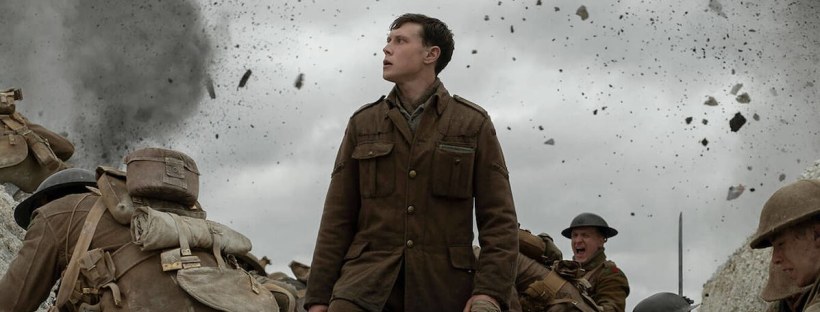
In the world of 21st century cinema, films must thrive despite vast competition during their opening weekend, leading to a studio tendency to over-hype supposed brilliance in the weeks before release, in a desperate bid to sell tickets. Too often phrases like ‘greatest film of the year’ and ‘masterpiece’ are bandied about without the film actually deserving such accolades.
Yet, every so often a film comes along and breaks this rule, deserving the plaudits and living up to the hype. Films like Saving Private Ryan, The Kings Speech and… 1917.
Inspired by his grandfather’s war time experiences, director, Sam Mendes, picked up a pen and wrote his first screenplay alongside Krysty Wilson-Cairns. Mining both family memories and wartime archives for inspiration, the pair have created a quietly powerful narrative by focusing on the personal rather than global impact of a war which fundamentally changed the world.
Mendes proves to be a dab hand at screen-writing, but it’s his directional choice to shoot the entire film as if it’s a single shot that proves to be the real stroke of genius here.
Pushing the boundaries of modern film-making, and teaming up with his long-time collaborator, cinematographer Roger Deakins, Mendes creates a beautiful ballet between the camera and the action, immersing the audience in the journey of the two leads and delivering an unrelenting insight into the horrors of the First World War.
Even with the skilled hands of Deakins standing behind the camera, this high-risk gamble only pays off thanks to the commitment and performances of the film’s two leads, Dean Charles Chapman and George McKay.
Delivering a seminal performance, McKay anchors the film, providing it’s emotional heart. As the audience connects with a young man who has seen too much of war, but is continually asked to risk his life over millimetres of land in a country that’s not his own and for a conflict he no longer understands.
You might have been attracted to 1917 because of the stunning visuals but you’ll leave having fallen in love with the characters, each of whom serve to remind us that the millions of men who never returned from the Western Front were individuals, with thoughts, feelings and friendships, just trying to survive and get back home.
E
 Elle's Scribbles